Off grid living transforms your daily routines by replacing dependence on municipal utilities with independent systems you control. Solar panels generate your electricity, rainwater harvesting supplies your water, composting toilets eliminate sewage costs, and food gardens reduce grocery bills. The shift demands upfront investment and new skills, but thousands of people in 2026 are discovering that partial or full off-grid independence brings lower monthly expenses, resilience during emergencies, and a deeper connection to how your household actually functions.
The ideas you’ll find here range from weekend projects like building a rocket stove to multi-year commitments like drilling a well. Some require land; others work in suburban settings. You don’t need to abandon your job and move to the wilderness. Start with one system, learn how it performs through a full season, then expand. Last spring, a contributor on our team installed a 400-watt solar setup to run her home office during frequent power outages. Six months later, she added battery storage and now covers her evening lighting too. That incremental approach works.
This guide presents 12 practical off-grid ideas across energy, water, food production, waste management, and communication. Each entry explains what the system does, what it costs to start, and who it suits best. You’ll see selection criteria to help match ideas to your budget, property size, and comfort with maintenance. Whether you’re testing self-sufficiency or planning a full transition, these concepts give you concrete next steps.
What Makes an Off-Grid Living Idea Practical
Not every off-grid solution makes sense for every homesteader. Before you invest time and money, evaluate each idea against five practical criteria that determine whether it’ll genuinely serve your situation or become an expensive learning experience.
Initial cost versus long-term payoff is where most people start, but don’t just compare price tags. A $3,000 solar setup might seem steep until you calculate 20 years without electric bills, while a $500 composting toilet delivers immediate savings on septic systems and water use. Look at the total picture: installation costs, ongoing expenses, and how many years until you break even. Some ideas, like hand tools or root cellaring, require minimal upfront investment and pay dividends immediately.
Your current skill level matters more than enthusiasm. I’ve watched friends attempt complex greywater systems as their first project, only to abandon them halfway through when the plumbing overwhelmed them. Start honest about what you can tackle now versus what requires hiring help or serious learning time. Solar panel installation might need an electrician, but rainwater collection can be a weekend DIY project for most beginners.
Climate shapes everything. Wood-burning stoves excel in cold regions with abundant timber but make little sense in Arizona. Rainwater harvesting thrives in the Pacific Northwest’s wet seasons but needs massive storage tanks in arid climates. Research what works in your specific region before committing; your climate isn’t just a minor factor, it’s the foundation of feasibility.
Scalability determines whether an idea grows with you or becomes a dead end. Can you start small and expand? Chicken coops can go from three hens to a full flock, solar panels can be added incrementally, and gardens naturally scale up. Systems that lock you into one size from day one limit your options as your needs evolve.
Finally, maintenance requirements separate sustainable solutions from burdens. A composting toilet needs regular attention; a root cellar mostly takes care of itself. Calculate not just money but time, your most finite resource. The best off-grid idea is one you’ll actually maintain five years from now, not just during the honeymoon phase of self-sufficiency.
Essential Off-Grid Living Ideas for 2026
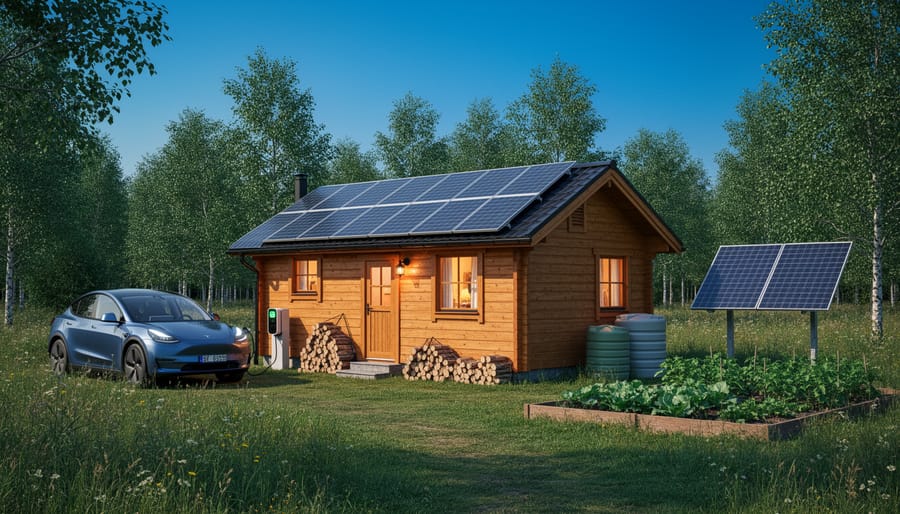
1. Solar Power Systems: Your Energy Independence Foundation
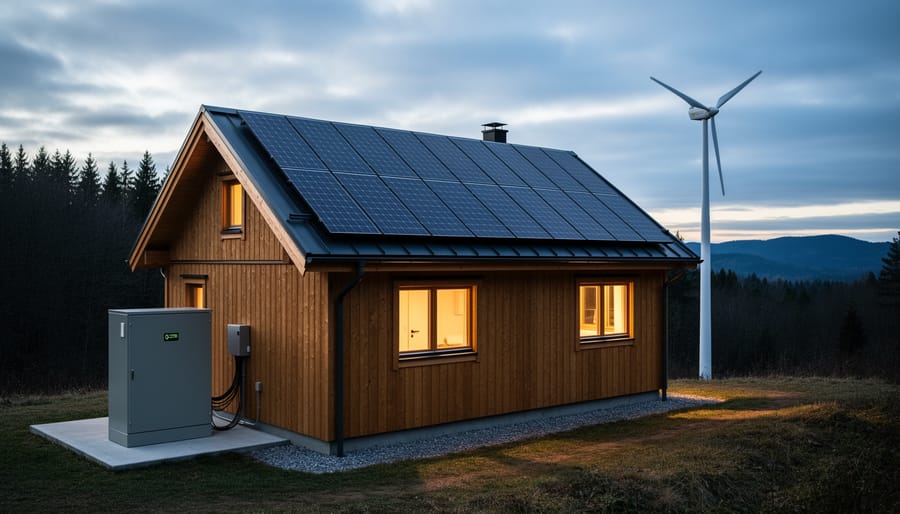
Solar power systems form the backbone of energy independence, and you’ve got more options than you might think. Start small with a 100-watt panel kit powering a few lights and phone chargers, or scale up to a full roof array supporting an entire homestead. The sweet spot depends on your actual consumption.
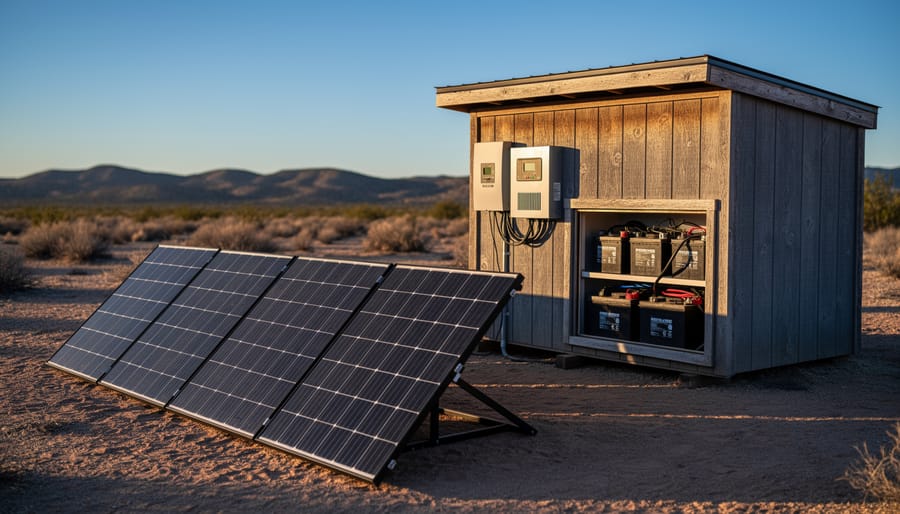
Our contributor Sarah began with three 300-watt panels and two deep-cycle batteries, running her off-grid cabin’s essentials for under $2,000. She learned quickly that cloudy winter weeks demanded either backup propane appliances or additional battery capacity. After two years, she added four more panels and can now power a chest freezer year-round.
Expect a basic starter system to handle LED lighting, electronics, and small appliances. Whole-home setups require professional load calculations, but many homesteaders build gradually. Winter sun angles matter more than summer output in northern climates. Budget for battery replacement every 5-10 years depending on chemistry and use patterns. Most importantly, reducing your consumption before you buy panels saves thousands compared to oversizing the system from day one.
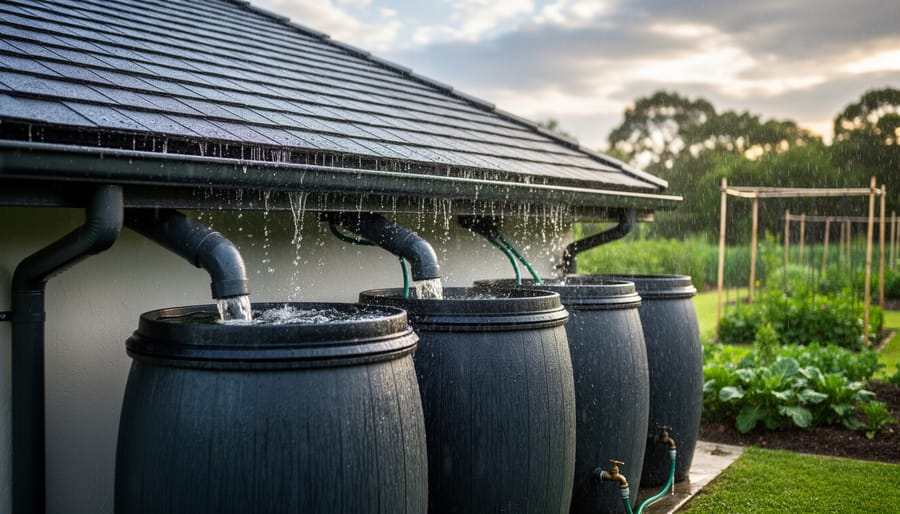
2. Rainwater Harvesting and Filtration
Rainwater systems transformed my second year off-grid when I realized hauling water every three days wasn’t sustainable. A basic setup needs three components: collection surfaces (usually your roof), storage tanks, and filtration. Calculate your tank size by multiplying your roof’s square footage by 0.6 gallons per inch of rainfall, in my Montana climate with 14 inches annual precipitation, a 1,200-square-foot roof theoretically yields about 10,000 gallons, though I actually capture closer to 7,500 after accounting for losses and dry spells.
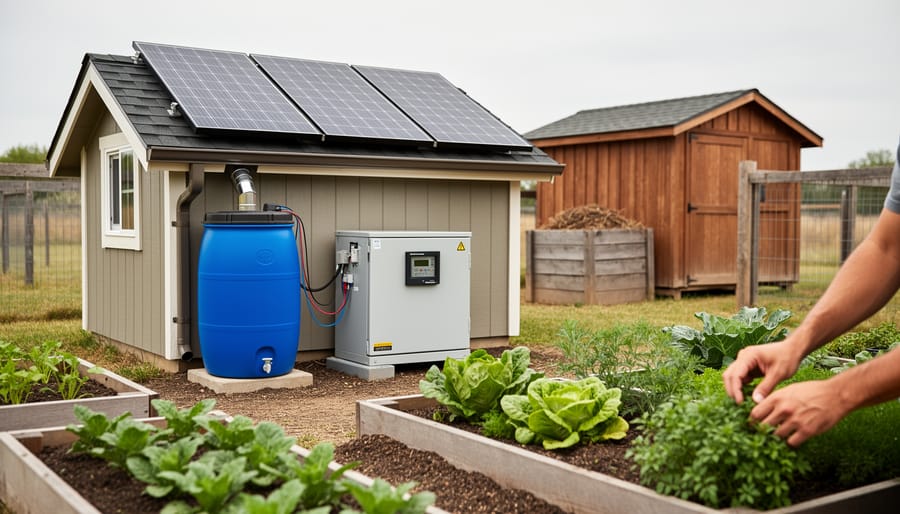
Start with food-grade IBC totes or purpose-built cisterns placed on raised platforms for gravity-fed pressure. Install first-flush diverters to discard the initial contaminated runoff from each rain event. For drinking water, I run everything through a two-stage system: sediment filters followed by UV sterilization. During summer months, I sometimes collect 300 gallons from a single thunderstorm, but winter and early spring require strict rationing until snowmelt begins.
The learning curve involves understanding your local rainfall patterns and adjusting consumption accordingly, something no calculation sheet fully prepares you for until you’ve lived through a season.
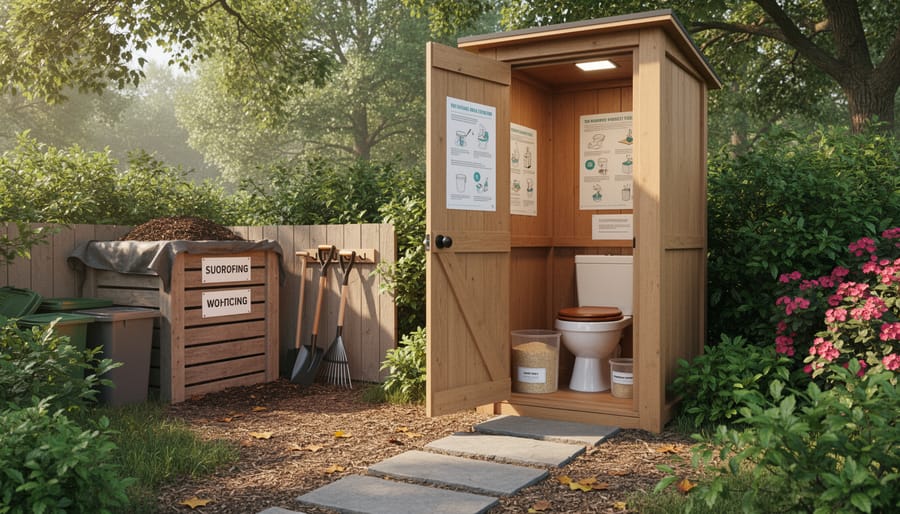
3. Composting Toilets for Sustainable Sanitation
Composting toilets eliminate the need for septic systems and turn waste into usable compost for non-edible gardens. The two main types are self-contained units (everything in one chamber) and central systems (toilet separate from composting bin). Self-contained models like Nature’s Head or Sun-Mar work well for small cabins and cost $900-$1,400, while central systems handle multiple bathrooms but require more space and installation effort.
Daily maintenance is straightforward: add a scoop of carbon material (sawdust, coconut coir, or peat moss) after each use and give the mixing handle a few cranks if your model has one. Empty liquid containers every few days and the solid bin every 4-8 weeks depending on usage. The carbon addition controls odor remarkably well, when maintained properly, there’s no smell.
One contributor hesitated for months before installing their first composting toilet, worried about the “ick factor.” Three years in, they consider it one of their best off-grid decisions. The key is consistent carbon additions and not overthinking the process. These systems work through aerobic decomposition, the same natural process happening in your garden compost pile. After a year of curing, the finished compost enriches ornamental plantings and fruit trees safely.
4. Wood-Burning Stoves for Heat and Cooking
A quality wood-burning stove transforms your off-grid home into a dual-purpose powerhouse, delivering reliable heat through winter while serving as your primary cooking surface. We’ve found that cast-iron stoves with flat cooktop surfaces offer the most versatility, letting you simmer soups while warming the room. The learning curve involves understanding draft control and heat zones, but within a few weeks most contributors report cooking meals that rival their old electric ranges.
Wood sourcing becomes your new rhythm. Many off-gridders dedicate spring and early summer to cutting, splitting, and stacking a full winter’s supply, typically three to five cords for a small cabin, depending on climate and insulation. Dead standing timber and storm-felled trees provide free fuel if you own wooded land, while others establish relationships with local tree services or purchase seasoned hardwood by the cord.
The reality check: you’ll spend more time maintaining fire and managing ash than flipping a thermostat. One contributor in Montana keeps kindling prepped year-round and runs the stove from October through April, banking coals overnight to restart easily each morning. The payoff isn’t just independence from utility bills, it’s the satisfying competence of heating your home and cooking dinner with a resource you gathered yourself.
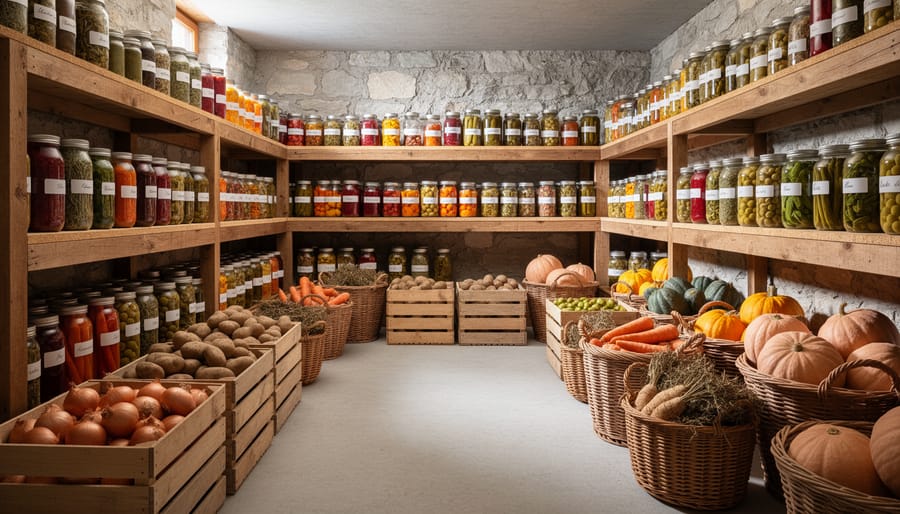
5. Root Cellaring and Food Preservation
Root cellars harness the earth’s stable temperature to store produce for months without electricity. A basement corner, buried bin, or hillside dugout can maintain the 32-40°F range most roots and winter squash need. In Vermont, I converted a crawlspace section with gravel flooring for drainage and vents for air circulation, it kept my potatoes, carrots, beets, and cabbages from October through March with minimal spoilage.
Best storage crops include root vegetables like turnips and parsnips, winter squash varieties, apples that tolerate cold, and onions cured properly before cellaring. Separate ethylene-producing apples from other crops, check weekly for soft spots, and maintain 80-95% humidity with damp sand or sawdust for carrots and beets. Proper curing before storage matters: cure onions two weeks in open air, winter squash until the rind hardens.
For adaptable spaces, insulate walls, add thermometers to monitor conditions, and install simple wooden shelving that allows airflow. This centuries-old preservation method requires zero ongoing energy, making it foundational for food security when refrigeration isn’t an option.
6. Greywater Recycling Systems
Greywater, the relatively clean wastewater from sinks, showers, and washing machines, can irrigate gardens and orchards instead of flowing into a septic system. A basic gravity-fed setup uses a branched drain line that diverts greywater through a simple mesh filter before distributing it to mulch basins around fruit trees or raised beds. You’ll want to check state reuse rules first, as some jurisdictions require permits or restrict which crops you can irrigate. Use biodegradable soaps without salts or boron, and never reuse water that’s touched raw meat or diapers.
I installed a laundry-to-landscape system in one afternoon using flexible polyethylene tubing and a three-way valve that lets me switch between greywater irrigation and the regular drain. The system feeds a dozen mulch basins around my property, and I’ve noticed my water bill drop by a third during the growing season. Start with a single fixture, your washing machine is ideal because it produces consistent, sudsy water that most plants tolerate well. Keep the system shallow and distribute water frequently to prevent salt buildup in the soil.
7. Backyard Chickens for Eggs and More
Chickens represent one of the most accessible entries into off-grid protein production. A small flock of four to six hens provides daily eggs without requiring elaborate infrastructure or advanced skills, making them ideal for beginners testing self-sufficiency waters.
Your coop needs just four square feet per bird inside, plus secure outdoor run space. Salvaged materials work perfectly. Contributor Sarah Jenkins built her first henhouse from reclaimed pallets for under $75, and five years later those same birds still supply her family’s eggs. Ventilation matters more than insulation in most climates, chickens handle cold better than heat and humidity.
Feed costs run roughly $15-20 monthly for a small flock, but you’ll reduce this significantly by letting birds forage, feeding kitchen scraps, and growing fodder greens. Store-bought layer pellets ensure consistent nutrition when natural sources diminish.
Beyond eggs, chickens transform food waste into garden fertilizer, control pests in orchards, and teach you animal husbandry fundamentals that scale to larger livestock later. Start with hardy heritage breeds like Rhode Island Reds or Barred Rocks, they tolerate variable conditions and forgive rookie mistakes while you learn the rhythm of tending animals daily.
8. Hand-Powered and Manual Tools
When the power goes out, or when you choose to live without it, manual tools become your lifeline. I learned this the hard way during my first winter off-grid when my battery bank died during a storm. Having a hand-crank grain mill, manual water pump, and basic woodworking tools meant we didn’t just survive; we thrived.
Start with a quality hand grain mill for flour and a manual food processor for vegetables. For woodworking and repairs, invest in hand saws, a brace and bit set, and hand planes, they’re quieter than power tools and never need charging. A manual water pump provides backup access to your well, while a good crosscut saw and splitting maul handle firewood processing without gas or electricity.
The real benefit isn’t just backup capability. Using manual tools builds physical strength, teaches you how things actually work, and creates a satisfying rhythm to daily tasks. My neighbour swears his hand tools have outlasted three generations of power equipment while costing a fraction to maintain. Keep cutting edges sharp, handles tight, and moving parts oiled, these tools will serve you for decades, independent of any grid.
9. Greenhouse Growing for Year-Round Food
A greenhouse transforms your growing season from a few summer months into a year-round food production system, even in harsh climates. I built my first greenhouse using salvaged windows and cattle panels, nothing fancy, but it extended my harvest by four months on both ends of the season and paid for itself in saved grocery bills within two years.
The secret lies in passive solar design: orient the structure south-facing, use thermal mass like water barrels or dark-painted concrete blocks to absorb daytime heat and release it at night, and insulate the north wall. This simple setup can keep temperatures 20-30°F warmer than outside without electricity. In mild winter areas, you’ll grow lettuce, spinach, kale, and Asian greens through January. Colder regions can still produce cold-hardy crops or use the greenhouse to start seedlings weeks earlier than outdoor planting dates allow.
Start small, even an 8×10 structure teaches you microclimates and ventilation needs before you scale up. Focus first on extending your main growing season rather than trying to grow tomatoes in February. That practical approach builds both skills and confidence in greenhouse growing as a core off-grid living idea.
10. Off-Grid Communication Solutions
Living off-grid doesn’t mean cutting yourself off from the world, it means choosing more intentional communication tools. When cell towers go dark during storms or you’re simply beyond their reach, reliable backup systems become essential safety equipment and your link to community.
Ham radio remains one of the most dependable off-grid communication solutions. You’ll need a license, which involves studying for and passing an exam, but the process teaches you fundamentals that make you a better operator. A basic handheld radio starts around $30, while a capable base station runs $300-800. During emergencies, ham operators form networks that work when nothing else does. One contributor running a remote homestead checks in with a local repeater every morning, it’s become both a safety protocol and a way to coordinate supply runs with neighbors.
Satellite communicators like Garmin inReach or ZOLEO offer two-way messaging and SOS capabilities anywhere on earth. Monthly subscriptions run $15-65 depending on message volume, but the peace of mind, and the ability to reach emergency services from truly remote locations, makes them worthwhile for serious off-gridders. They’re particularly valuable during the transition period when you’re still learning your land and systems.
11. Humanure and Waste-to-Resource Systems
Humanure systems extend composting beyond kitchen scraps to include all household organic waste, creating a closed-loop nutrient cycle that serious off-grid homesteaders swear by. The process safely converts human waste into pathogen-free compost through thermophilic decomposition, essentially hot composting that reaches temperatures high enough to eliminate harmful organisms.
One contributor who’s maintained a humanure system for eight years uses a simple five-gallon bucket toilet with sawdust cover material, emptying it into a dedicated outdoor compost bin that reaches 140°F or higher during active decomposition. The finished product, aged for at least a year, goes exclusively on fruit trees and ornamental gardens, never directly on vegetable crops, a safety protocol emphasized throughout permaculture literature.
The setup requires minimal infrastructure: a collection container, carbon-rich cover material like sawdust or shredded leaves, and a well-designed compost bin positioned away from water sources. What surprises most beginners is how odorless the system becomes when you maintain proper carbon-to-nitrogen ratios, roughly 30:1, and keep moisture levels right. It’s admittedly not the easiest starting point for off-grid living ideas, but for those committed to true waste independence, humanure composting represents the ultimate resource recovery system while dramatically reducing water consumption.
12. Battery Storage and Backup Power
Solar panels generate power when the sun shines, but your homestead needs electricity at night and during cloudy stretches. That’s where battery storage transforms renewable energy from supplemental to truly reliable.
Lithium iron phosphate (LiFePO4) batteries cost roughly double upfront compared to lead-acid but deliver 3,000-5,000 cycles versus 500-1,000, making them cheaper per kilowatt-hour over their lifespan. They also charge faster and handle partial discharge without damage. Lead-acid remains viable for tight budgets if you’re disciplined about maintenance and full recharge cycles.
Sizing matters more than battery chemistry. Track your actual daily consumption in watt-hours for a week, not theoretical estimates. A contributor running LED lights, a laptop, and a 12-volt fridge found 200 amp-hours at 24 volts covered three sunless days comfortably. Overbuying capacity you’ll rarely use wastes money; undersizing means frequent generator backup.
Start with enough storage for one or two days of your current essential loads, then expand as your off-grid confidence and energy literacy grow.
Starting Your Off-Grid Journey: What to Implement First
You’ve explored twelve distinct paths toward self-sufficiency, but standing at the trailhead can feel overwhelming. The good news: you don’t need to implement everything at once. Most successful off-grid homesteaders I’ve spoken with started with one or two projects, built confidence, then expanded from there.
Your first moves should address immediate needs while building skills for future projects. Start where you’ll see daily impact and where failure won’t leave you stranded. Here’s the proven sequence for beginners:
- Rainwater collection for gardens, low cost, immediate water savings, teaches you about seasonal patterns
- Solar power starter kit, a small system for lights or phone charging builds electrical confidence without major investment
- Composting toilet or humanure system, eliminates a monthly bill while creating garden fertility
- Hand tools and manual alternatives, no installation required, just swap electric for manual as tools wear out
- Backyard chickens, manageable livestock that provides food, fertilizer, and daily homesteading rhythm
Budget constraints actually help prioritize. Rachel, a contributor who transitioned over three years, started with a single 100-watt solar panel and a rain barrel. “Those two projects cost me less than $400 total, but they proved I could do this. Everything else followed naturally once I trusted myself.”
Focus on projects that teach transferable skills. Installing a small solar setup teaches you electrical basics you’ll use for battery storage later. Building a simple greywater system trains you in plumbing before tackling rainwater filtration. Each success builds the knowledge base for your next challenge.
The critical insight: off-grid living isn’t a destination you reach in a weekend. It’s a gradual shift toward independence, one system at a time. Some homesteaders take a decade to fully transition, adding capabilities as finances allow and skills develop. There’s no shame in a hybrid approach where you remain grid-connected while building resilience through backup systems.
Start with what excites you most. Enthusiasm carries you through the learning curve better than rigid efficiency ever will.
Common Questions About Off-Grid Living
How much does it cost to start living off-grid?
Initial costs vary dramatically based on which systems you prioritize, but many people start with $3,000, $10,000 for basic solar power and water collection, then add systems gradually. You don’t need to implement everything at once, most successful off-grid homesteaders built their independence over 3-5 years as budgets allowed.
Do I need special permits for off-grid systems?
Requirements differ widely by location, but rainwater harvesting, greywater systems, and composting toilets often trigger local regulations. Check with your county planning department before installing permanent systems, and research state-specific water rights if you’re drilling wells or diverting streams.
Can I go off-grid without prior experience?
Absolutely, most off-grid homesteaders started as complete beginners. Begin with simpler projects like rainwater collection or a small solar setup, then build skills through hands-on experience. Many contributors recommend mastering one system before adding another rather than attempting everything simultaneously.
Which off-grid systems provide the biggest impact?
Solar power and water independence typically deliver the most immediate benefits since they eliminate monthly utility bills and provide essential resources. Once those foundations are established, food production systems like gardens and chickens create compounding self-sufficiency that reduces grocery dependence year after year.
How do I combine multiple off-grid ideas effectively?
Look for synergies between systems, greywater from your kitchen can irrigate fruit trees, chickens produce fertilizer for gardens, and wood ash from your stove enriches compost. Successful off-grid living connects these elements into closed loops where one system’s output becomes another’s input, minimizing waste and maximizing efficiency.
The learning curve feels steep at first, but every off-grid system you master makes the next one easier. One contributor started with a single solar panel charging batteries for lights, then added panels annually until achieving complete energy independence five years later. That incremental approach builds confidence and practical knowledge without overwhelming your budget or schedule.
Legal considerations catch many beginners off guard. Beyond permits, some areas restrict rainwater collection, mandate grid connection for occupied dwellings, or prohibit certain waste systems. Research before purchasing property if possible, since rural counties generally offer more flexibility than suburban areas with strict codes. Joining local homesteading groups often reveals which officials are supportive and which regulations are actually enforced versus technically on the books.
Off-grid living isn’t about making one dramatic leap; it’s about stacking small, intentional steps that build toward genuine independence. Maybe you start with a single solar panel to charge devices, plant a few cold frames, or try composting. Each capability you develop deepens your connection to the outdoor lifestyle and sharpens essential skills that modern convenience has dulled. Over months and seasons, those individual experiments compound into a functioning homestead system that reflects your priorities and environment.
One contributor who transitioned gradually over three years shared this perspective: “The best part wasn’t cutting the power bill or harvesting my own food, though those were satisfying. It was realizing I could solve problems with my hands and actually understand how my home worked. That sense of capability changes how you move through the world.” That self-reliance, earned through practice rather than purchased, is what makes off-grid living genuinely rewarding. You already have the curiosity and determination, now it’s just a matter of starting where you are with what you have.