Bear spray in Canada is regulated as a pest control product by Health Canada, and choosing the right canister means verifying it’s labeled for use against animals, not humans, while meeting Parks Canada’s recommended minimum capacity of 225 millilitres. The canisters you’ll find in outdoor retailers typically disperse a capsaicin-based fog at approximately 10 metres, creating a barrier between you and an aggressive bear. Understanding the legal framework before you purchase matters because crossing provincial lines or traveling by air with bear spray carries specific restrictions, and carrying the wrong product or size can leave you unprepared when a black bear investigates your campsite or a grizzly challenges your trail access.
I learned this the hard way during a solo hiking trip in Kananaskis Country three summers ago. I’d purchased what I thought was proper bear spray from a general sporting goods store, only to discover at the trailhead that my canister held 75 millilitres and was marketed primarily as dog deterrent. The ranger checking permits that morning pointed out the Parks Canada guidelines, and I ended up buying a replacement can from the visitor center at nearly double the price. That mistake taught me to verify specifications before any purchase, not after.
The difference between adequate protection and false confidence comes down to understanding capsaicin concentration (0.75% to 1% is the effective range, not higher percentages sold in self-defense sprays), total volume, spray pattern, and deployment range. Wilderness encounters happen fast. A startled grizzly can cover 50 metres in about three seconds, which means your spray needs enough capacity for multiple bursts and a wide fog pattern that doesn’t require precision aiming under stress.
Understanding Bear Spray Regulations in Canada
Canada treats bear spray as a legal wildlife deterrent, but only when it meets specific regulatory standards. Understanding these requirements before you purchase ensures you stay compliant while securing effective wilderness safety protection.
The federal definition is straightforward: bear spray must be a capsaicin-based deterrent designed for animals, not people. Parks Canada describes it as a non-lethal repellent containing capsaicin, the same chemical that gives chili peppers their heat. This chemical composition is what makes it legal to carry and use against wildlife in close encounters.
Canadian law imposes two hard limits on what you can purchase:
- The package cannot exceed the 500 ml package limit
- Labels must show animal-use labeling required by federal regulations
- The spray must contain capsaicin as its active deterrent ingredient
The labeling requirement is critical. Any canister lacking clear animal-use designation is illegal to carry, regardless of its actual contents. Check the label at point of purchase, because some retailers stock pepper sprays designed for human attackers alongside bear deterrents. The two look similar but carry vastly different legal implications.
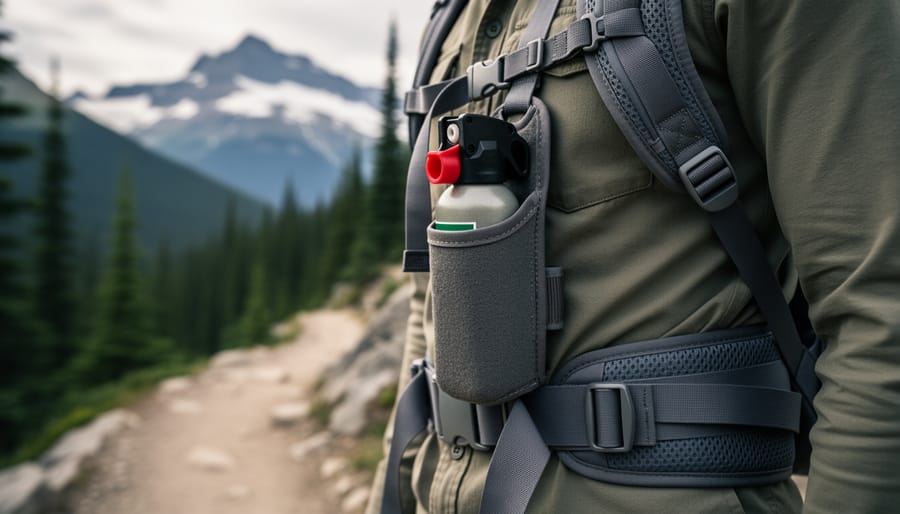
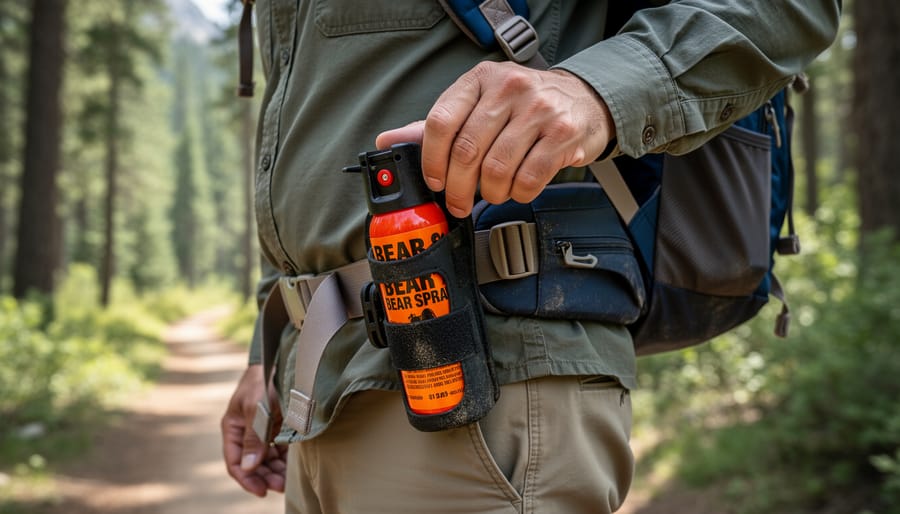
Parks Canada recommends 225 ml canisters as the practical standard for most users, though the law allows up to 500 ml. This recommended size balances deployment duration with portability for day hikes and backcountry trips. The spray should be carried in a holster you can reach easily with your dominant hand. If you are biking, Parks Canada advises placing it in your water bottle rack rather than a pack or pannier.
What remains unclear are age restrictions and licensing requirements. Some provinces may impose additional rules, but federal Parks Canada guidance does not specify minimum purchase ages or permits. When buying, ask the retailer about local requirements rather than assuming the federal standard covers everything. The legal landscape may vary depending on where you plan to travel or live off-grid, so verify current rules for your specific region before heading into bear country.
Key Buying Factors for Bear Spray
Capacity: Finding the Right Size
Parks Canada recommends 225 ml cans as the practical standard for most wilderness outings. This size balances enough spray for multiple bursts, critical if you encounter more than one bear or need a second deployment, with weight and bulk you can comfortably carry all day.
The 500 ml legal maximum exists for extended backcountry trips or remote wilderness living, where resupply points are days or weeks apart. A larger canister offers longer spray duration in a single deployment, but it adds noticeable heft to your pack. For weekend hikes or day trips, 225 ml is plenty. On week-long or multi-week expeditions, stepping up to 325 ml or even 450 ml makes sense if you’re covering grizzly country and want that extra margin.
I learned this the hard way lugging a full-size can on a three-day loop where a smaller option would have freed pack space for food. Match your canister to your trip length and the wildlife density you expect, not just the maximum the law allows.
Capsaicin Concentration and Spray Range
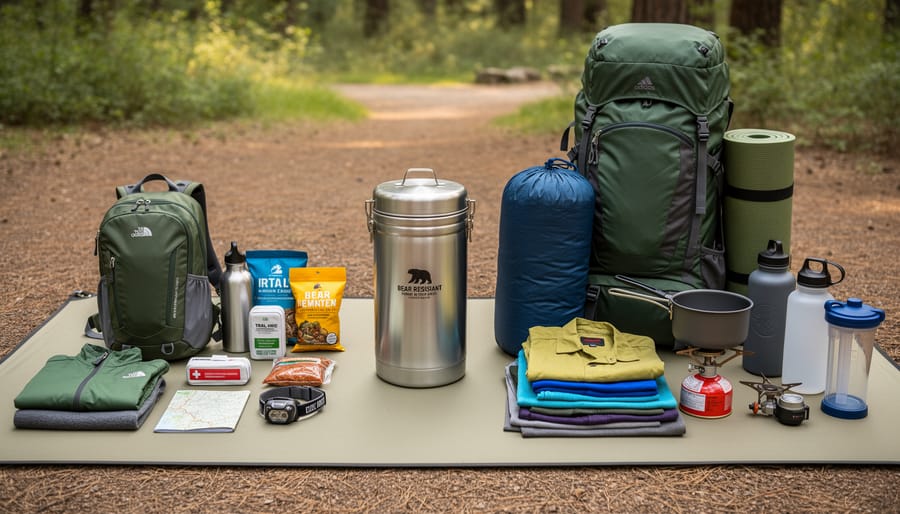
The active ingredient in bear spray is capsaicin, the same compound that gives chili peppers their heat. For wilderness use in Canada, you’ll want a concentration between 0.75% and 1% capsaicin. This range creates an effective cloud that causes temporary eye and respiratory irritation in bears without causing permanent harm.
Spray range matters when you’re facing a charging bear. Most effective bear sprays deliver approximately 10 meters of reach, giving you a crucial buffer zone between you and an approaching animal. That distance translates to about three to four seconds of reaction time if a bear is moving at full speed, enough to deploy the spray before the encounter becomes physical contact.
These specifications work together in real scenarios. The 10-meter range means you can create a barrier while maintaining safer distance. The capsaicin concentration at 0.75% to 1% produces a dense fog pattern rather than a narrow stream, which is what you need when adrenaline kicks in and precision aiming becomes nearly impossible. I’ve carried spray on backcountry trips where just knowing I had that 10-meter cushion changed how I approached bear country trails, making me more confident rather than reckless.
Accessibility and Carry Systems
How you carry your bear spray matters just as much as which can you choose. I learned this the hard way during a backpacking trip in the Rockies when I fumbled with a buried canister while a black bear circled our campsite. Parks Canada is clear on this: bear spray must be in a holster you can easily reach with your dominant hand, not stuffed in a backpack or clipped to a side strap you cannot access quickly.
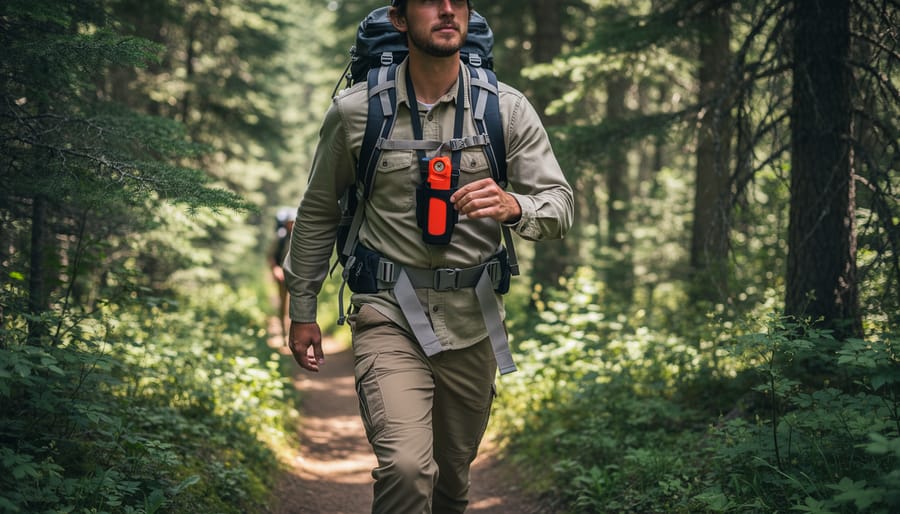
For hikers and campers, a belt-mounted holster on your dominant side lets you draw the canister in under two seconds. I keep mine on my right hip, positioned so my hand falls naturally to it when I lower my arm. Chest holsters work well for those carrying heavy backpacks, keeping the spray accessible even with a hip belt loaded with gear.
Cyclists face different challenges. Parks Canada recommends placing bear spray in your bike’s water bottle rack where you can grab it while still mounted or immediately after dismounting. A friend who bikes forest trails near Jasper rigged a second bottle cage on his top tube specifically for this purpose, keeping his actual water bottle in the traditional frame position. The key is testing your setup before you need it, ensuring you can deploy the spray without hunting for it while adrenaline floods your system.
Types of Bear Spray Compared
Choosing bear spray in Canada means navigating a variety of formats, each suited to different wilderness scenarios. The main distinctions you’ll encounter come down to canister size, how you carry it, and design features that affect deployment speed when a bear approaches.
Size Categories and Practical Trade-offs
The 225ml canister sits at the core of most recommendations because Parks Canada specifically endorses this capacity. It strikes a balance: large enough for multiple bursts during a prolonged encounter, yet compact enough that you’ll actually carry it rather than leave it in your pack. Larger canisters up to the 500ml legal maximum offer extended spray time, which appeals to those spending weeks in grizzly country or guiding groups, but the added weight and bulk can become a hindrance on long treks. I’ve watched backpackers opt for a bulky 400ml can only to bury it deep in a side pocket by day three, defeating the entire purpose.
Smaller formats below 225ml exist, but they sacrifice precious seconds of spray duration. In a close encounter where you’re creating a capsaicin barrier between yourself and a charging bear, those extra seconds matter. The verified capsaicin concentration of 0.75% to 1% and spray range of approximately 10 meters remain consistent across sizes, so capacity becomes the variable that determines how long you can maintain that protective cloud.
| Size Category | Best Use Case | Carry Method | Trip Duration |
|---|---|---|---|
| 225ml (standard) | Day hikes, weekend camping | Belt holster, chest holster | 1-3 days |
| 300-400ml | Extended backcountry trips, group leaders | Pack strap mount, chest holster | 4-10 days |
| 500ml (maximum) | Remote living, wilderness guides | Dedicated holster system | Season-long or permanent placement |
Attachment Systems That Actually Work
Your holster choice directly impacts whether you can deploy bear spray within the critical two-second window. Belt holsters work well for hiking because they position the canister where your dominant hand naturally falls, exactly as Parks Canada recommends. Chest holsters distribute weight better under a heavy pack and keep the spray accessible even when your hip belt carries gear, though reaching across your body takes practice.
Cyclists face unique constraints. Mounting bear spray in your bike’s water bottle rack, per Parks Canada guidance, means you can grab it without stopping, but also requires a quick-release system that won’t eject the canister on rough trails. I’ve seen riders jerry-rig solutions with bungee cords that became fumbling disasters when they needed speed.
Canister Design Details
Trigger mechanisms vary more than you’d expect. Some canisters use a flip-top safety that you pop with your thumb, others require a two-finger squeeze. In cold Canadian conditions with gloved hands, a simple, large trigger beats a complex safety system. Glow-in-the-dark components help during dawn or dusk encounters, and some designs include grip texturing that works even when wet from river crossings or rain.
The canister’s spray pattern also differs: fog delivery creates a wider barrier but reduces range slightly, while stream patterns reach farther in calm conditions yet get disrupted by wind. Canadian wilderness often means variable weather, so most experienced users favour fog delivery despite the range compromise.
Recommended Bear Spray Options for Canadian Wilderness
When selecting bear spray for Canadian wilderness conditions, your activity profile and environment matter more than marketing claims. The 225ml can Parks Canada recommends serves most scenarios, but the decision comes down to accessibility, carry logistics, and how long you’ll be beyond help.
Day hikers covering established trails need maximum accessibility with minimal bulk. Look for 225ml canisters in hip-mounted holsters that position the spray forward of your dominant hip, allowing a quick cross-body draw. The holster should click open with one hand and hold the can firmly during fast walking or scrambling over rocks. I learned this after watching a friend fumble with a Velcro-closure holster when a black bear stepped onto the trail thirty feet ahead, those seconds of delay felt endless. Prioritize spray with the 0.75% to 1% capsaicin concentration and approximately 10-meter range, giving you standoff distance on narrow paths.
Backcountry campers and those who live off the grid in bear country face different requirements. Extended trips justify carrying two canisters: one on your belt and a backup in your pack’s top pocket. The primary can should still be 225ml for weight efficiency, but consider a larger backup approaching the 500ml legal maximum if you’re out for weeks. Chest holsters work better than hip mounts when wearing heavy packs, keeping the spray accessible even with a waist belt cinched tight. Verify both cans have at least two years before expiry, replacing expired spray in remote locations isn’t practical.
Cyclists need bear spray in their bike’s water bottle rack, as Parks Canada specifies. The challenge is finding canisters that fit standard rack cages while remaining accessible during a sudden stop. Look for 225ml models with slightly tapered bases that won’t rattle loose on rough trails. Practice removing the can while straddling your bike, you won’t have time to dismount if a bear charges from the brush. This also applies to kayak camping safety where spray must stay within arm’s reach in the cockpit rather than buried in dry bags.
For each scenario, the core requirements remain consistent:
- Animal-use labeling clearly visible on the canister
- Volume at or below the 500ml legal limit
- Capsaicin concentration between 0.75% and 1%
- Approximately 10-meter spray range verified on packaging
- Expiry date at least one year beyond your trip end
- Holster or mounting system matched to your primary activity
What to skip: spray marketed with vague “maximum strength” claims without specific capsaicin percentages, canisters without clear animal-deterrent labeling, and any holster requiring two hands to open. The best bear spray for Canadian wilderness is the one you can deploy instantly with your dominant hand when a close encounter makes it your last resort.
Where to Buy Bear Spray in Canada
You’ll find bear spray at major outdoor retailers like MEC, Canadian Tire, and Cabela’s across most urban centers. Sporting goods stores and camping supply shops typically stock several options, particularly in regions near national and provincial parks. If you’re living in or near wilderness areas, smaller outdoor outfitters in gateway towns often carry bear spray and can provide local insight about wildlife activity patterns.
Before remote trips, purchase well in advance. I learned this the hard way when a last-minute supply run in a small northern town yielded only expired cans. Local outdoor shops in remote areas may have limited inventory, especially during peak hiking season from May through September.
At the point of purchase, verify three critical details. First, check the label confirms the product is intended for use on animals, not for personal defense against humans. Second, ensure the canister doesn’t exceed the 500ml legal maximum. Third, examine the expiry date, which typically ranges from three to four years from manufacture. Never buy spray expiring within the next year, as you’ll lose effectiveness partway through the season.
If you’re assembling a complete kit of adventure survival gear for backcountry living, consider buying multiple canisters. Keep one accessible in your holster and store extras in your vehicle or base camp. Some retailers offer bulk pricing for wilderness residents purchasing several units at once.
Regional outdoor stores near Parks Canada locations often display educational materials about proper deployment, reinforcing that bear spray serves as a last resort deterrent in close encounters. Staff at these locations generally have firsthand experience and can answer questions about local bear behavior and recommended carry systems for your specific activities.
Common Mistakes to Avoid When Buying Bear Spray
I learned this mistake the hard way during my first backcountry trip in Jasper: I grabbed a 550ml canister from a friend’s garage, thinking bigger was always better. At the trailhead, a park ranger stopped me. That canister exceeded Canada’s 500ml legal maximum, and I had to turn back to buy a compliant one. The delay cost me hours and nearly derailed the entire trip.
Exceeding the volume limit is just one of several critical errors. Another common mistake involves skipping the label check. Canadian law requires bear spray to clearly state it’s intended for use on animals. I’ve seen people buy pepper spray marketed for personal defense, thinking it’s the same thing. It isn’t. Without proper animal-use labeling, you’re carrying a product that’s not only potentially illegal but also likely ineffective against bears.
Capsaicin concentration matters more than many realize. Some buyers chase the highest percentage they can find, assuming strength equals safety. The verified recommended range is 0.75% to 1% capsaicin. Anything outside this range might seem more powerful on paper, but formulations below or above this sweet spot won’t deliver the reliable deterrent effect you need during a close encounter.
Ignoring expiry dates is another frequent oversight. Bear spray degrades over time, losing pressure and potency. I once watched a hiker discover his canister had expired three years earlier, right before heading into grizzly country. He made the two-hour drive back to town rather than risk it, which was the right call but avoidable with a simple date check before leaving home.
Finally, accessibility failures undermine even the best spray. Choosing a carry system that doesn’t allow quick access with your dominant hand defeats the purpose. I’ve seen chest holsters that required two-handed fumbling and belt clips buried under backpack waist straps. Parks Canada recommends dominant-hand access for a reason. During my first bear encounter, reaching my properly-mounted holster took two seconds. That speed mattered. For cyclists, placing spray anywhere except the bike’s water bottle rack creates dangerous delays when you need both hands on the handlebars.
Frequently Asked Questions About Bear Spray in Canada
Proper bear spray maintenance and usage remain critical concerns for anyone venturing into Canadian wilderness. These practical questions address the realities of carrying and deploying this essential safety equipment.
How long does bear spray last before it expires?
Check the expiry date printed on your canister, expired bear spray may not deploy properly or deliver effective deterrent power. Replace cans as they reach their expiration date, and consider this timeline when stocking supplies for remote living situations.
When should you actually deploy bear spray?
Parks Canada emphasizes that bear spray is always a last resort, intended to repel a bear only during a close encounter. It’s a non-lethal deterrent containing capsaicin that should never be used casually or deployed at distance.
Can you practice with bear spray before an emergency?
Practice cans exist specifically for training purposes, allowing you to familiarize yourself with the deployment mechanism and spray pattern without wasting your primary canister. Real wilderness encounters demand confidence with your equipment.
What’s the proper way to carry bear spray while biking?
Parks Canada recommends placing bear spray in your bike’s water bottle rack for quick access while cycling through bear country. This positioning balances accessibility with the practical challenges of mounting a holster while riding.
Storage considerations matter year-round. Keep canisters away from extreme temperatures, car dashboards and heated cabins can compromise the propellant, while freezing conditions may affect spray performance. The holster recommended by Parks Canada should allow you to reach your spray easily with your dominant hand, whether you’re hiking, camping, or working outdoors around your wilderness property.
Bear spray represents just one component of comprehensive wildlife safety tips for Canadian backcountry living. Making noise while traveling, storing food properly, and understanding bear behavior all reduce the likelihood you’ll ever need to deploy your canister. That said, carrying properly labeled, regulation-compliant spray in an accessible holster provides essential backup when other precautions fail to prevent a close encounter with wildlife.
Choosing the right bear spray isn’t just about meeting legal requirements, it’s about equipping yourself with reliable protection that fits seamlessly into your wilderness routine. Whether you’re hiking mountain trails, setting up a remote cabin, or cycling backcountry routes, bear spray serves as your essential last-resort deterrent in close encounters with wildlife.
Remember that proper selection means verifying current regulations before you buy. Look for animal-use labeling, stay within the 500ml volume limit, and prioritize accessibility with a holster suited to your dominant hand. Bear spray works best as one component of comprehensive wildlife safety: making noise on trails, storing food properly, and understanding bear behavior remain your first lines of defense.
The wilderness rewards those who prepare thoughtfully. By selecting bear spray that meets Canadian standards and carrying it where you can reach it instantly, you’re investing in both your safety and your confidence to explore responsibly. Verify the details, choose wisely, and step into nature knowing you’ve taken a crucial step toward self-sufficient wilderness living. The trails are waiting, go prepared.