

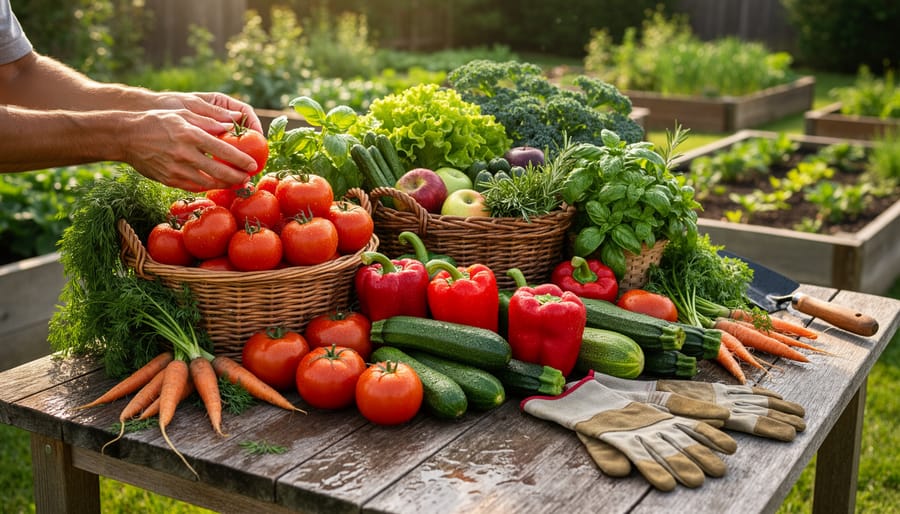
There’s something transformative about stepping into your backyard at dawn, dew still clinging to tomato vines you planted three months ago, and picking breakfast straight from the soil. Last spring, I watched my neighbor transform a struggling patch of lawn into a thriving vegetable garden that fed her family of four throughout summer. She started with just three raised beds and a weekend of preparation.
Homegrown gardening turns any outdoor space into a productive food source, whether you have a sprawling backyard or a compact patio. The practice combines ancient agricultural wisdom with modern techniques, letting you control exactly what goes into your soil and onto your plate. You’ll reduce grocery bills, cut your carbon footprint, and discover flavors that supermarket produce can’t match.
Starting your first food garden requires less than you might think. A sunny spot receiving six to eight hours of direct light, decent soil or quality potting mix, and seeds suited to your climate zone form the foundation. Most beginners succeed by choosing forgiving crops like lettuce, radishes, and cherry tomatoes that produce quickly and tolerate rookie mistakes.
The real magic happens when you understand your garden as a living system. Healthy soil feeds your plants, which in turn feed you. Companion planting keeps pests in check naturally. Succession planting ensures harvests from spring through fall. These aren’t complicated techniques, just patterns that work with nature instead of against it.
This guide walks you through everything from selecting your first seeds to preserving your autumn harvest, giving you the knowledge to grow food successfully year after year.
Why Homegrown Gardening Changes Everything
The moment you bite into a tomato you’ve grown yourself, something shifts. It’s warmer from the sun, bursting with flavour nothing from a supermarket can match, and suddenly you understand why people get hooked on homegrown gardening. That single taste contains months of anticipation, daily care, and a connection to your food that most of us have lost somewhere between modern convenience and shrink-wrapped produce.
Growing your own food does more than fill your kitchen with fresh vegetables. It reconnects you to the rhythms of nature in ways that change how you see the world. You’ll notice the angle of sunlight shifting with the seasons, understand what weather your plants need, and find yourself checking seedlings before your morning coffee. This awareness grounds you in something larger than daily routines.
The health benefits run deeper than nutrition charts. When you grow food yourself, you control what touches your plants. No mystery pesticides, no wax coatings, no wondering how long it’s been sitting in cold storage. You harvest what you need, minutes before eating it, capturing peak vitamins and flavour compounds that degrade during transport and shelf time.
Sarah, one of our longtime contributors, remembers standing in her garden at dawn, coffee in hand, staring at her first ripe pepper. “I’d walked past that plant every day for two months,” she recalls. “Watching that tiny flower become food I could eat felt like witnessing a small miracle. I was genuinely excited about a bell pepper.” That excitement hasn’t faded for her, five growing seasons later. It won’t fade for you either, because homegrown gardening taps into something fundamental: the satisfaction of creating abundance with your own hands.
Starting Your Homegrown Garden: The Essential Foundation
Choosing the Right Location and Understanding Your Space
Your garden’s location determines whether you’ll harvest baskets of tomatoes or struggle through a disappointing season. Before you dig a single hole, spend a few days observing how your space behaves, it’s the most valuable time you’ll invest.
**Tracking Sunlight Through Your Space**
Most food crops need six to eight hours of direct sunlight daily. Walk your potential garden sites at different times, morning, midday, and late afternoon, to see where shadows fall. That spot under the maple tree might get morning sun but lose it by noon. Your south-facing wall might create a heat trap perfect for peppers but too intense for lettuce. Take photos at each time to compare, or mark shade patterns with stakes.
**Reading Drainage and Soil Clues**
After a heavy rain, check where water pools and where it drains quickly. Standing water for more than four to six hours signals poor drainage that drowns roots. Raised beds solve this problem beautifully. Look at what already grows naturally, lush weeds suggest decent soil, while bare patches might indicate compaction or contamination.
**Evaluating These Key Factors**
When selecting your garden location, assess:
- Proximity to your kitchen, you’ll tend and harvest more often when it’s convenient
- Access to water, dragging hoses 100 feet gets old fast
- Protection from harsh winds that damage plants and dry soil
- Visibility from a window you pass daily, out of sight means forgotten
- Space for future expansion as your confidence grows
**Adapting to Your Space Reality**
Small yards and balconies work wonderfully with vertical growing, container gardens, and compact varieties. You can grow more than you’d expect in a four-by-eight-foot raised bed. Large properties offer room to experiment with different microclimates, use them. That shaded north side? Perfect for leafy greens that bolt in full sun.
Soil Preparation That Sets You Up for Success
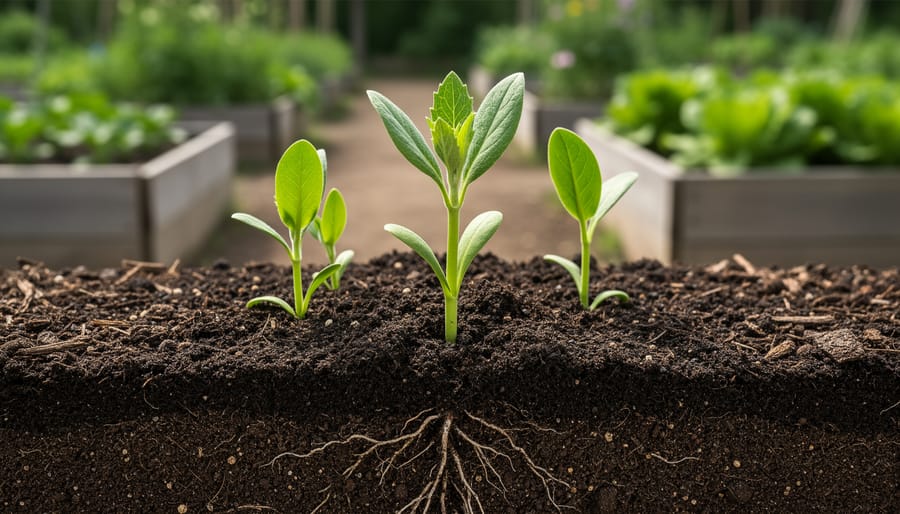
The difference between a garden that merely survives and one that thrives starts beneath the surface. Your soil is the living engine that fuels every tomato, every leaf of lettuce, every root vegetable that will eventually reach your dinner table.
Start by getting to know what you’re working with. Grab a handful of slightly moist soil and squeeze it. Clay soil forms a tight ball that holds its shape. Sandy soil won’t hold together at all. Loam, the gardener’s gold standard, forms a ball that crumbles easily when poked. For a complete picture, invest in a simple soil testing and amendments kit from your local extension office. You’ll learn your pH and nutrient levels, which tells you exactly what your soil needs rather than guessing.
Most vegetables prefer slightly acidic to neutral soil, around 6.0 to 7.0 pH. If your test shows you’re off that mark, limestone raises pH while sulfur lowers it. But the real magic happens when you focus on organic matter.
Compost transforms average soil into something exceptional. You don’t need a fancy system. Start with a simple bin or even a pile in the corner of your yard. Layer green materials like kitchen scraps and grass clippings with brown materials like dried leaves and cardboard, keeping it as moist as a wrung-out sponge. Turn it every few weeks. In three to six months, you’ll have dark, crumbly compost that smells like a forest floor.
Work two to three inches of compost into your beds before planting. This feeds beneficial soil organisms, improves drainage in clay soils, helps sandy soils hold moisture, and provides a slow-release buffet of nutrients your plants will draw from all season.
Selecting Your First Crops
Your first crop choices can make or break your confidence as a new gardener, so start with plants that forgive mistakes and reward you quickly. The best strategy is matching crops to both your USDA plant hardiness zones and what you actually eat, there’s no point growing Brussels sprouts if your family won’t touch them.
Focus on fast-maturing, high-yield vegetables that deliver results within your first season. Lettuce, radishes, and snap peas offer quick wins in spring. Tomatoes, zucchini, and bush beans dominate summer gardens with abundant harvests that justify their space. Herbs like basil, cilantro, and parsley thrive in containers if ground space is limited.
| Crop | Best Season | Difficulty | Days to Harvest |
|---|---|---|---|
| Lettuce | Spring/Fall | Easy | 30-45 |
| Cherry Tomatoes | Summer | Easy | 60-70 |
| Zucchini | Summer | Very Easy | 45-55 |
| Basil | Spring-Summer | Easy | 30-40 |
| Radishes | Spring/Fall | Very Easy | 25-30 |
Start with four to six varieties maximum. Growing fewer plants well beats overwhelming yourself with a sprawling garden that demands constant attention. Choose at least one “safety crop” like radishes or lettuce that matures in under 40 days, giving you an early harvest even if later plantings struggle. This builds momentum and teaches you about your specific growing conditions before you invest in longer-season crops.
Season-by-Season Homegrown Gardening Strategy
Spring and Summer: Maximizing Peak Growing Season
Spring and summer deliver your garden’s peak performance window, but timing and consistency determine whether you harvest abundantly or watch potential wither on the vine. Start warm-season transplants like tomatoes and peppers two weeks after your last frost date, when soil temperatures reliably hit 60°F. Direct-sow beans, cucumbers, and squash once the ground warms to 70°F, cold soil stunts germination and invites rot.
Succession planting keeps your harvest flowing rather than overwhelming you with fifty zucchinis in one week. Sow lettuce, radishes, and bush beans every two weeks through early summer. Plant a second round of cucumbers in mid-June for fall production when the spring plants fade.
Water deeply but less frequently to encourage strong root systems. Most vegetables need one inch weekly, delivered in a single morning session rather than daily sprinkles. Mulch heavily with straw or shredded leaves to retain moisture, suppress weeds, and keep soil temperatures stable during heat waves.
Watch your plants, not the calendar. Tomatoes setting fruit in 95-degree heat produce misshapen vegetables and drop blossoms, shade cloth during extreme temperatures preserves your crop. Harvest summer squash at six inches rather than waiting for prize-sized specimens; smaller fruits taste better and signal the plant to keep producing. Your garden operates on biological time, and attention to these rhythms yields more food than rigid adherence to planting charts ever will.
Fall and Winter: Extending Your Harvest
Most gardeners assume the growing season ends with the first frost, but that’s when some of the best crops are just getting started. Cool-season vegetables like kale, spinach, carrots, and Brussels sprouts actually improve in flavor after exposure to cold temperatures, converting starches to sugars as a survival mechanism.
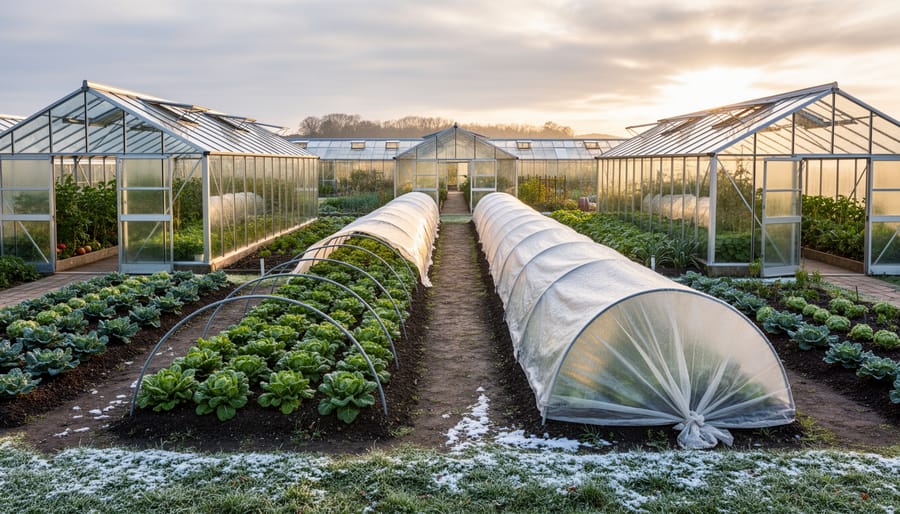
A simple cold frame transforms November through March from dormant months into productive ones. You can build one in an afternoon using scrap wood and an old window, positioning it against a south-facing wall for maximum sun exposure. I learned this from contributor Sarah Mitchell, who started her first cold frame on a whim five years ago. “I thought I was just experimenting,” she told me, “but that January, when I walked through snow to harvest fresh lettuce for dinner, something clicked. I realized winter didn’t have to mean store-bought produce.” She now runs four cold frames and a small hoop house, harvesting greens all winter in Zone 6.
For crops without protection, timing matters more than temperature tolerance. Plant garlic in October for next summer’s harvest. Sow spinach, mache, and claytonia in late September, they’ll germinate in fall warmth, then sit semi-dormant through winter and explode with growth in early spring, weeks before you could plant them.
Row covers and cloches extend harvests for root vegetables already in the ground. Mulch carrots, parsnips, and beets heavily with straw, then dig them as needed. They’ll stay fresh in the soil far longer than in your refrigerator.
When abundance does arrive, preserve it simply. Freeze harvested greens after a quick blanch. Ferment cabbage into sauerkraut. Dry herbs in bundles. Root vegetables store for months in a cool basement or garage in boxes of damp sand. These techniques require minimal equipment but extend summer’s bounty through the lean months, making your garden work harder for you.
Natural Pest Management and Problem Solving
Garden pests and problems don’t have to mean reaching for chemicals or admitting defeat. The most successful homegrown gardening happens when you learn to work with nature’s systems instead of fighting them. Your role shifts from warrior to observer and partner.
Start by walking your garden daily with curious eyes. Notice which plants look stressed, where insects congregate, and which areas thrive. You’ll catch problems early, when a few aphids can be wiped off with your fingers rather than becoming an infestation. This simple habit prevents most disasters before they start.
Prevention beats intervention every time. Healthy plants resist pests naturally, so focus on building strong soil and proper spacing for air circulation. Companion planting works wonders: nasturtiums lure aphids away from tomatoes, while basil near peppers confuses pest insects. Marigolds scattered throughout your beds deter soil nematodes and add a cheerful blast of color.
When pests do arrive, identify them before reacting. Not every insect is your enemy. Ladybugs devour aphids. Ground beetles hunt slugs at night. Lacewings demolish mealybugs. Learn to recognize these allies and protect them. A garden with diverse insect life stays balanced naturally.
For genuine problems, start with the gentlest solution. Hand-picking works brilliantly for larger pests like tomato hornworms and squash bugs. A strong spray from your hose knocks aphids off plants. Diatomaceous earth sprinkled around plant bases stops slugs and snails without harming birds or beneficial insects.
Barriers solve problems without ongoing effort. Row covers protect young plants from flying pests and birds while allowing light and water through. Copper tape around raised bed edges repels slugs. A collar of cardboard around seedling stems prevents cutworm damage.
Disease prevention follows similar principles. Water at soil level in the morning so leaves dry quickly. Prune for airflow. Remove affected leaves promptly. Rotate crops annually so disease organisms can’t build up in the soil.
Some damage is acceptable. A few chewed leaves won’t hurt your harvest. Perfection isn’t the goal, abundance is. Your garden can sustain minor pest pressure while still feeding you generously. That perspective keeps homegrown gardening enjoyable rather than stressful.
Harvesting and Preserving Your Homegrown Goods
The sweetest moment in homegrown gardening arrives when you step into your garden at dawn and pluck a sun-warmed tomato or snap a crisp bean at its prime. But knowing exactly when to harvest, and how to preserve that abundance, makes the difference between a fleeting summer success and year-round self-sufficiency.
Most vegetables signal peak harvest through subtle cues you’ll learn to read with practice. Tomatoes should give slightly to gentle pressure and slip easily from the vine. Zucchini tastes best at six to eight inches long; wait longer and it turns woody. Leafy greens like lettuce and spinach should be picked in the morning when sugars are highest, before heat turns them bitter. Root vegetables often sweeten after a light frost, while herbs reach maximum oil content just before flowering. Your nose and fingertips become your most reliable guides, trust them.
For crops that ripen gradually, harvest every two to three days during peak season. This regular picking triggers most plants to produce more, extending your harvest window. Check beans, cucumbers, and summer squash daily once production starts; leaving overmature fruit on the plant signals it to stop producing and focus on seed development.
Once you’ve gathered more than you can eat fresh, simple preservation methods extend your harvest through winter and beyond.
| Preservation Method | Best Crops | Shelf Life | Equipment Needed |
|---|---|---|---|
| Freezing | Berries, beans, peppers, herbs | 8-12 months | Freezer bags, blanching pot |
| Canning | Tomatoes, pickles, jams | 1-2 years | Pressure canner or water bath |
| Dehydrating | Tomatoes, herbs, peppers | 6-12 months | Dehydrator or oven |
| Root Cellaring | Potatoes, carrots, squash | 3-6 months | Cool, dark storage space |
Start with freezing if you’re new to preservation. Blanch vegetables in boiling water for two to three minutes, plunge them into ice water, then freeze in labeled bags with air pressed out. This method captures that just-picked flavor better than any store-bought option.
For true self-sufficiency, combine methods based on your storage space and cooking habits. A well-stocked freezer, shelf of canned tomatoes, and basket of winter squash means your homegrown garden feeds you long after the last frost, transforming seasonal abundance into daily nourishment.
Growing Beyond Vegetables: Expanding Your Homegrown Garden
After a season or two of successful vegetable harvests, your confidence grows along with your garden. This is the perfect moment to expand into fruits, herbs, edible flowers, and medicinal plants that bring new dimensions to your homegrown gardening practice.
Start with perennial herbs like rosemary, thyme, and oregano. They require less maintenance than annual vegetables, establish permanent spots in your garden, and provide fresh flavors for years. Mint grows almost too enthusiastically, so contain it in pots unless you want it spreading everywhere. Basil, cilantro, and dill work beautifully as quick-growing annuals tucked between vegetables.
Berry bushes offer excellent returns for the space they occupy. Blueberries thrive in acidic soil and provide stunning fall color alongside summer fruit. Raspberries and blackberries produce heavily once established, though they need sturdy trellising. Strawberries work well as border plants or in hanging containers, making them ideal for smaller spaces.
Dwarf fruit trees have changed the game for backyard orchards. A dwarf apple or pear tree fits in a 10-foot square and starts producing within two to three years. Container-grown citrus trees can even winter indoors if you live outside their hardiness zone.
Edible flowers like nasturtiums, calendula, and borage add color while attracting beneficial insects. They self-seed readily, returning year after year with minimal effort. Many also have peppery or sweet flavors that elevate salads beyond grocery store possibilities.
Medicinal plants such as echinacea, chamomile, and lemon balm bridge the gap between garden and apothecary. Even if you never make your own teas or tinctures, these plants support pollinators and add diversity to your ecosystem.
The key is adding one or two new types each season rather than overhauling everything at once. Each expansion teaches you something different about growing cycles, pruning, or preservation methods. Your homegrown garden becomes richer and more resilient with every layer you add.
Your homegrown gardening journey doesn’t end with this article, it starts the moment you put a seed in the ground. Whether you begin with a single tomato plant on a balcony or dedicate a corner of your yard to raised beds, you’re stepping into a practice that connects you to something larger than yourself. You’re joining generations who’ve understood that growing your own food isn’t just about the harvest; it’s about reclaiming agency over what you eat and rediscovering the rhythms that modern life has pushed aside.
The path ahead will bring challenges. Plants will fail, pests will test your patience, and weather will humble your plans. But these moments teach resilience and observation in ways no tutorial can. Each season builds on the last, and the garden that feels overwhelming in spring becomes familiar territory by fall. You’ll develop instincts about when to water, which plants thrive in your microclimate, and how your soil changes over time.
Start small. Plant three things you actually want to eat. Learn their needs, celebrate their growth, and expand from there. The journey toward self-sufficiency isn’t a race, it’s a gradual shift in how you see the land around you and your role in it.
And when you bite into that first sun-warmed tomato you grew from seed, still standing in your garden with dirt under your nails, you’ll understand why people keep coming back to this work year after year.
