You can manage waste off grid without a septic system, and do it safely and legally, by treating each waste stream separately: human waste, gray water, and household trash each get their own method. The approach takes a weekend or two to set up, sits at a beginner-friendly difficulty level, and starts with one key prerequisite: finding out what your local authorities require before you dig, build, or compost anything.
That last step matters more than most newcomers expect. In California, for example, the State Water Resources Control Board says anyone who discharges waste that could affect waters of the state must submit a report of waste discharge. The Water Board may then issue individual or general waste discharge requirements, or a waiver, with conditions meant to protect water quality. Rules vary by jurisdiction, so a quick call to your county or regional water authority saves you from expensive do-overs later.
Here’s the encouraging part. Once you understand the streams and your options, waste stops being a mystery and becomes a system, one of the quiet cornerstones of any self-sufficient homestead. Composting toilets, gray water setups, and smart household waste habits all work with nature instead of against it. This guide walks you through each one, compares your choices side by side, and shows you how to set up a system you’ll trust for years.
Why Waste Planning Comes Before the Cabin, the Camper, or the Garden
Most people picture the cabin, the solar panels, or the first raised bed. Waste rarely makes the list, yet it quietly shapes every other choice you make on your land. Where you put a toilet, a sink drain, or a compost pile decides where your well or spring is safe to draw from, where your garden will thrive, and how comfortable you’ll be living next to your own project.
Good waste planning protects three things at once. First, your water. Whatever you put on or in the ground can eventually travel, so keeping it away from your drinking source protects the most valuable thing you own. Second, wildlife and neighbors. Poorly handled waste attracts animals you’d rather not meet at your back door and can create problems for the people living nearby. Third, the land itself. Healthy soil is the foundation for the gardens, shelters, and trails that make off-grid life worth it.
Here’s the encouraging part: living without a septic system is absolutely possible. It just means choosing alternative methods that handle human waste and gray water both legally and safely. Rules differ from place to place, and it helps to understand legal graywater handling before you build anything.
The rest of this guide breaks the challenge into three manageable streams: human waste, gray water from your sinks and showers, and household, kitchen, and garden waste. Once you see them as separate jobs, each one has a practical solution.
Understanding Your Waste Streams
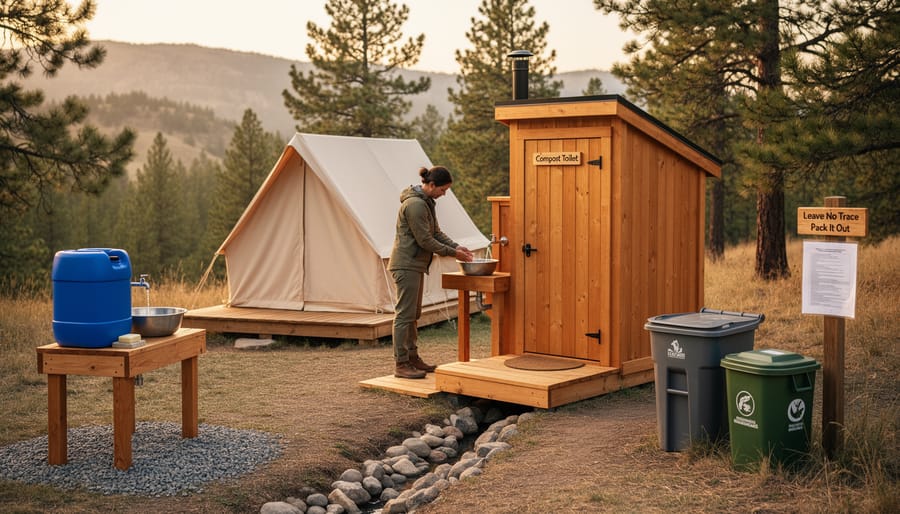
Before you can pick the right system, it helps to know what you’re actually dealing with. Off-grid waste really comes in a few distinct streams, and each one needs its own approach.
Human waste is the big one. This is what a toilet handles, and it’s the stream that most needs to be kept away from water sources. Living without a septic system is possible, but it means choosing an alternative method that handles human waste legally and safely.
Gray water is the used water from your sinks, showers, and laundry. It’s not toilet water, which makes it much easier to deal with, and many people find ways to reuse it thoughtfully. Even so, it carries soap, food bits, and grease, so it shouldn’t just run toward a stream or a well.
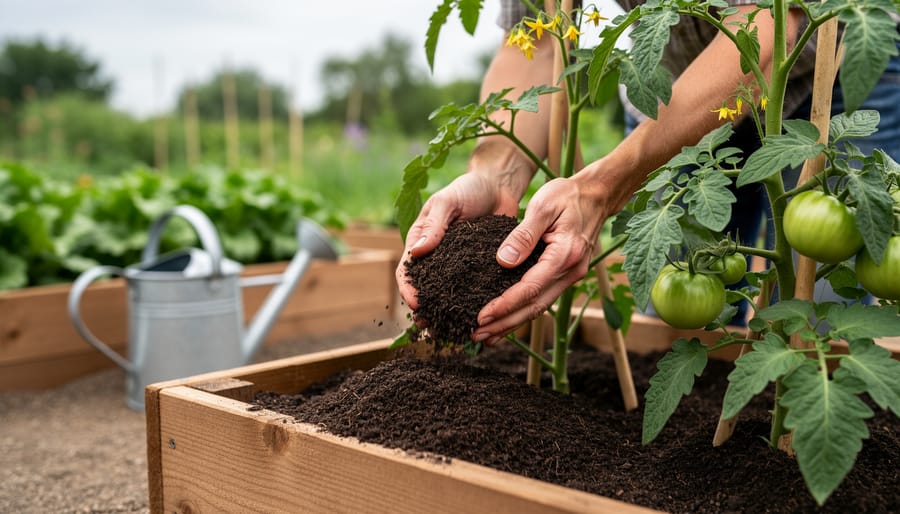
Kitchen and garden waste is the friendly category. Peels, coffee grounds, eggshells, and trimmings can become compost, and compost can become next season’s garden soil. There’s a lot to enjoy in that loop.
Everything else is the trash: packaging, broken gear, and anything that can’t rot or be reused. You’ll either reduce it, store it, or haul it out.
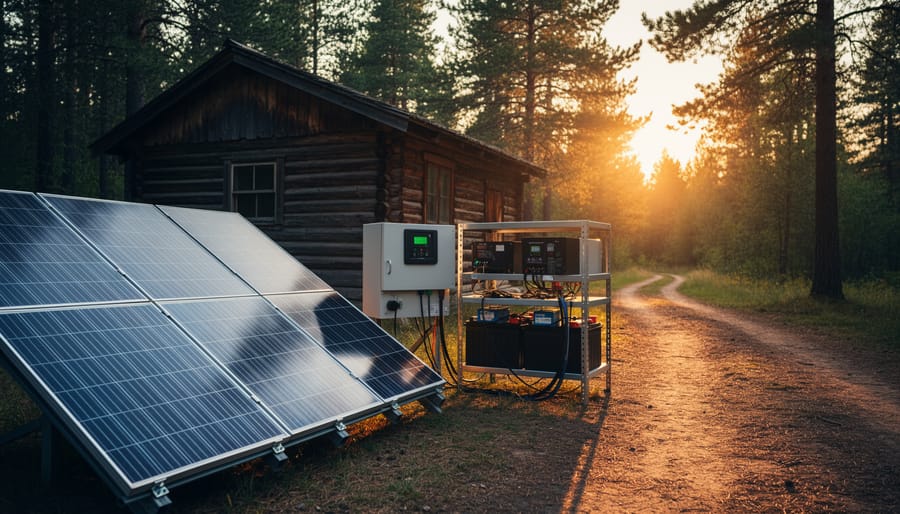
Think of it the way you’d plan a solar off-grid system. You wouldn’t size your panels without knowing your loads, and the same logic applies here. Whether you rely on simple setups or layered hybrid power systems for electricity, waste works best when each piece does its own job. Every stream benefits from being treated as part of one connected stand-alone system where nothing depends on a municipal line.
Once you can name your streams, matching a solution to each one feels far less overwhelming.
Handling Human Waste Off the Grid
Composting Toilets: The Everyday Favorite
A composting toilet is simpler than it sounds. You do your business, then cover it with a handful of dry material like sawdust, coconut coir, or peat moss. That cover keeps odors down and gives the waste the carbon it needs to break down. Most models separate liquids from solids, and a small fan vents air outside so the whole thing stays fresh. Over time, microbes do the slow work of turning waste into compost.
A typical routine is pleasantly boring. Add cover material after each use, empty the liquid container every few days, and move the solids to a finishing bin when the chamber fills up. Check the vent and fan now and then, and wipe things down. That’s about it.
One of our contributors admits her first emptying day was all nerves. She expected the worst, and instead found it nearly odorless. “It took about three weeks to find our rhythm,” she said. “After that, it was no more dramatic than taking out the kitchen compost.”
Here’s how the main options stack up, so you can match one to your setup:
| Option | Best use | Maintenance level | Key consideration |
|---|---|---|---|
| Composting toilet | Full-time cabins and homesteads | Regular, simple routine | Finished material must follow local rules |
| Pit or vault privy | Seasonal or remote sites | Low, occasional upkeep | Site selection and drainage matter |
| Portable/cassette toilet | Campers and small spaces | Frequent emptying | Need an approved place to dispose |
| Packing out | Backcountry trips | Handled on every trip | Follow area regulations and Leave No Trace |
A word of caution on the finished compost. Don’t assume it’s safe to spread anywhere you like. Rules on handling and using it vary by location, so check with your local health or environmental agency before deciding what to do with it.
Privies, Portable Toilets, and Packing It Out
Not every off-grid setup needs a full composting toilet. For a remote camp, a seasonal cabin, or a few nights in the backcountry, simpler options often fit better, and they work well when you plan them with a little care.
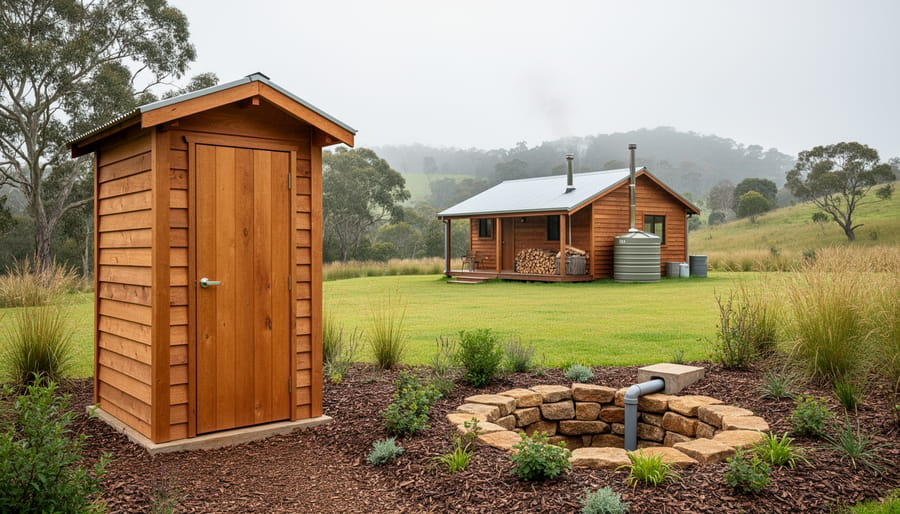
A privy, or pit toilet, is the classic low-tech choice for a spot you use occasionally. Where you put it matters more than how fancy it is. Look for ground that drains well and sits well away from streams, springs, wells, and any place water collects when it rains. Avoid low spots and dry creek beds, because runoff will carry waste straight into the water you rely on. If you’re unsure how far “away” should be, ask your local health or environmental agency instead of guessing. Distances vary by location.
Portable toilets are a handy middle ground. They contain waste so you can deal with it properly later, which makes them great for short stays or places where digging isn’t practical. You still need a plan for where the contents go, so figure that out before the trip, not after.
When you’re out in the wild, the Leave No Trace mindset is your best guide: pack it out whenever you can. Carrying out waste in a sealed container takes a bit more effort, but it leaves the place just as you found it, and it keeps wildlife and other visitors safe. Start thinking about disposal at the planning stage, and the whole process feels simple.
Gray Water: Reusing What Your Sink and Shower Send Away
Gray water is the used water from your sinks, showers, bathtub, and laundry. It isn’t squeaky clean, but it’s a different animal from toilet waste, and that’s exactly why it’s worth handling thoughtfully. Treated well, it can water a garden. Handled carelessly, it can pool, smell, attract pests, and sneak toward your drinking source.
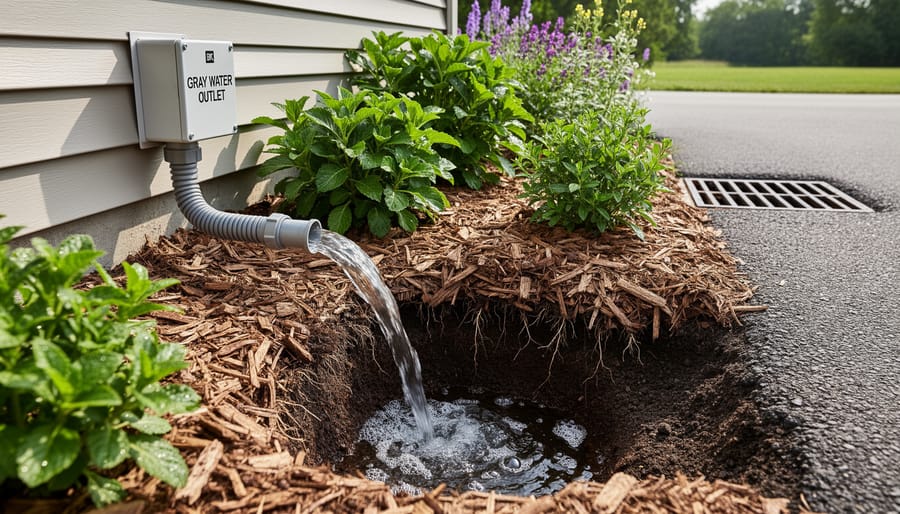
Most off-grid setups start simple. A basic filter or screen catches lint, hair, and food bits before water goes anywhere. From there, many people send the water to a mulch basin, which is just a shallow, wood-chip-filled pit around a tree or perennial where the soil and microbes do the heavy lifting. Others run it through a small constructed wetland or a branched drain that spreads water out so it never puddles. The goal is the same in every case: slow, even absorption, never standing water, and never sending it toward a well, creek, or spring.
What goes down the drain matters just as much as where it ends up. Plants and soil can only handle so much, so you’ll want soaps and detergents that are gentle on both. Look for products free of boron, chlorine bleach, and salt-heavy fillers, and skip anything with added fragrance or antibacterial agents.
I learned this the slow way. Our first season, I washed dishes with regular dish soap and sent the water to a little banana-and-herb bed out back. Within weeks the leaves yellowed and the soil turned crusty. Switching to a plant-friendly soap felt like a small thing, but the bed bounced back, and the bonus was fewer pests hovering around, which pairs nicely with natural pest control habits in the rest of the garden.
Here’s the part to take seriously: rules on gray water reuse differ a lot from place to place. Some areas allow simple systems with little paperwork, while others require permits, specific setbacks, or don’t allow reuse at all. Before you dig a single trench, look up your local graywater rules and confirm what applies on your land. A quick call to your county health or environmental office can save you real headaches later.
Kitchen Scraps, Garden Waste, and Everything Else
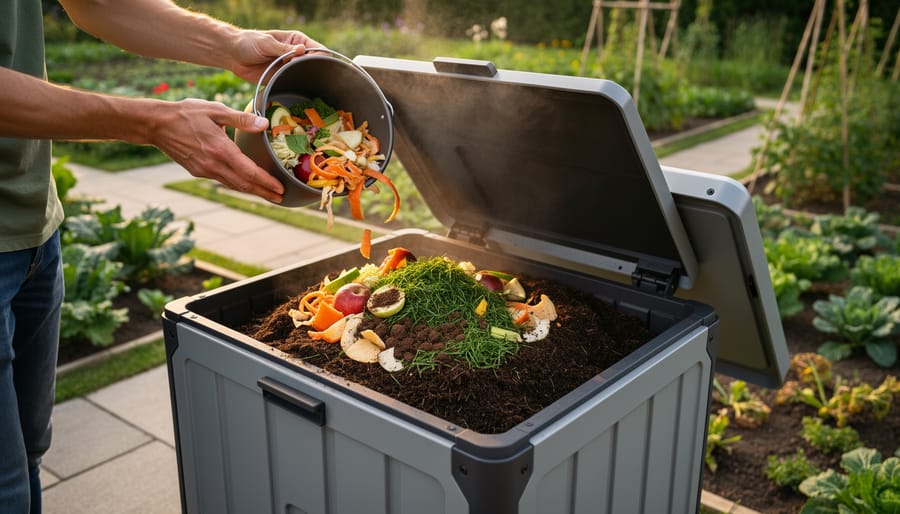
Once the toilet and the sink are sorted, you’ll notice the real volume of waste off the grid comes from the kitchen and the garden. The good news is that most of it never has to leave your land.
Start with food scraps and garden trimmings. A simple compost pile or bin turns peels, coffee grounds, eggshells, weeds and spent plants into something your soil will thank you for. Keep it general and keep it simple: mix wetter kitchen waste with drier material like leaves, straw or shredded cardboard, keep the pile loosely moist, and give it a turn now and then. Skip meat, dairy and oily leftovers unless you have a well-sealed system, because they invite raccoons, bears and rodents. A lid or a sturdy enclosure is worth the effort.
Cooking is where you can cut waste before it starts. Plan meals around what you already have so less spoils in the cooler. Then get a second life from your scraps before they hit the compost. Onion ends, carrot tops, celery leaves and herb stems all make a good vegetable stock, and bones simmer into a rich broth that stretches a meal. Whatever’s left after straining goes to the pile. It’s a small habit, but it shrinks your waste and fills your pantry.
For everything that can’t be composted, think in terms of less coming in and a smarter way out. Buy in bulk, choose minimal packaging, and refill your own containers where you can. Glass jars, buckets and tins have endless second lives for storing dry goods, carrying water or sorting hardware. What you can’t reuse, rinse and store dry so it doesn’t smell, and keep it in a lidded, animal-proof bin until your next trip to a transfer station or approved disposal site.
One note on rules: the composting regulations most people read about, like California’s Composting General Order, are aimed at commercial operations, not a backyard pile. Still, local requirements vary, so check with your county or local environmental agency before you scale up.
Setting Up Your Off-Grid Waste System, Step by Step
When my friend Dana first moved onto her family’s forty acres, her waste system was a bucket, a shovel, and a lot of optimism. Over three seasons it grew into a sawdust-style composting toilet, a mulch basin under the outdoor shower, and a tidy compost bin by the kitchen door. None of it was planned all at once. Each piece came from noticing what her days actually looked like and fixing the next annoying problem. You can borrow her approach, just with a little more forethought up front.
Think of it as a short sequence you can work through at your own pace:
- Map your site and water sources. Sketch your land and mark every well, spring, creek, and low spot where water collects. Note where the ground slopes, since waste should never drain toward anything you drink from.
- Estimate your household and usage. Count how many people will use the space and whether it’s year-round, seasonal, or weekends only. A full-time homestead needs a sturdier setup than a hunting cabin.
- Check local regulations. Call your county health or environmental agency before you buy or dig anything, and ask what they require for human waste, gray water, and composting.
- Choose a system for each waste stream. Match one solution to human waste, one to gray water, and one to kitchen and garden scraps, based on your usage and site.
- Install and test. Build or set up each piece, then run it for a week or two before relying on it. Watch for pooling, odors, or drainage that wanders somewhere you didn’t intend.
- Build a regular maintenance routine. Pick a weekly and a seasonal check, such as emptying, turning, cleaning filters, and inspecting for wear, and put it on the calendar.
Step three deserves extra attention. Living without a septic system is possible, but it means using alternative methods that legally and safely handle human waste and gray water. Rules vary widely, so it pays to understand how to live off grid legally in your specific area before you commit to a design. A system that’s perfect on paper can still cost you a fine or a rebuild if it skips a required permit.
Don’t let that slow you down, though. Start with the most urgent stream, usually human waste, and get it working first. Dana’s gray water setup came a full season later, and her compost bin after that. Each small win made the next step feel easier, and by the end she had a system that suited her land, her habits, and her schedule.
Know the Rules Before You Dig

Here’s the good news about regulations: they’re mostly there to protect the water you drink, the creek down the hill, and the neighbors you’d like to keep on good terms with. A little homework up front saves you from tearing out a system later.
California offers a useful example of how this works on paper. The State Water Resources Control Board says that anyone who discharges waste that could affect waters of the state must submit a report of waste discharge. That’s the starting point, and it’s worth reading through the state’s guidance on waste discharge reporting to see how the process is framed. Once a report is in, the Water Board may issue individual waste discharge requirements, general waste discharge requirements, or waivers of those requirements. Each one comes with conditions designed to protect water quality. In other words, the system isn’t built to say “no.” It’s built to make sure what you do on your land doesn’t end up where it shouldn’t.
Composting adds another layer of detail. The State Water Board adopted the Composting General Order on August 4, 2015, then revised it with a supplemental EIR certified on April 7, 2020. The General Waste Discharge Requirements for Commercial Composting Operations are Order WQ 2020-0012-DWQ, and they include Tier 1 and Tier 2 requirements meant to apply to most commercial composting operations.
Here’s the part that trips people up, so let’s be clear: those are commercial rules. They give you context for how larger operations are regulated, and they aren’t a statement about the compost bin behind your cabin. Don’t read them as a warning to abandon your garden pile. Read them as a reminder that waste handling is taken seriously, and that scale and purpose matter.
The biggest takeaway goes beyond California. Requirements differ by state, by county, and often by municipality, and I’d never want you to build a system on the assumption that one place’s rules apply to yours. The simplest, friendliest move is to call or visit your local health or environmental agency before you dig, trench, or install anything. Tell them what you’re planning, ask what’s allowed, and take notes.
Most folks find these conversations easier than expected. You walk away knowing exactly what’s legal on your land, and that confidence makes every build decision afterward much simpler.
Common Questions About Off-Grid Waste Management
Everyone arrives at off-grid waste with the same handful of worries. Here are the ones I hear most, answered plainly. The short version of nearly every answer is to check with your local authority before you build anything.
Can I really live without a septic system?
Yes, it’s possible, but you’ll need alternative methods that handle human waste and gray water legally and safely. What counts as acceptable varies by location, so confirm your options before you commit to a system.
Do I need a permit for a composting toilet?
It depends on where you live. Some places regulate waste systems tightly and others are more relaxed, so ask your local health or environmental agency what applies to your property.
Is gray water safe to use on a vegetable garden?
Rules on gray water reuse differ from place to place, and some areas limit or prohibit it around food crops. Check local requirements first, and stick with plant-friendly soaps if you do reuse it.
What do I do with waste while camping?
Follow the Leave No Trace mindset and the rules for the land you’re on. That usually means using established facilities where they exist, or packing out what you can’t responsibly deal with on site.
Where do I find out what’s legal in my area?
Start with your county or municipal health department or your state’s environmental agency. In California, for example, the State Water Resources Control Board says anyone discharging waste that could affect state waters must submit a report of waste discharge, and requirements and waivers can vary.
If your question isn’t on this list, the best move is usually a quick phone call to your local agency. They can tell you what’s allowed where you live, and most people find the conversation far less intimidating than they expected.
Looking back, that first week at the cabin felt overwhelming. Every dish, every shower, every trip to the outhouse raised the same question: where does all of this actually go? Now the answer is boring, and that’s the best sign a system is working. It runs quietly in the background while you get on with the parts of off-grid life that make the move worthwhile.
The core idea is simple. Give each waste stream its own solution: a composting toilet or privy for human waste, a thoughtful setup for gray water, and a compost pile and hauling routine for everything else. Before you build anything, check what your local health or environmental agency requires, since rules differ from place to place. Then settle into small, steady habits, like emptying on schedule, cleaning filters, and turning the pile.
None of it is glamorous, but all of it is self-reliance in practice. Grab a notebook, walk your site, and sketch your plan this week. Future you will be glad you did.